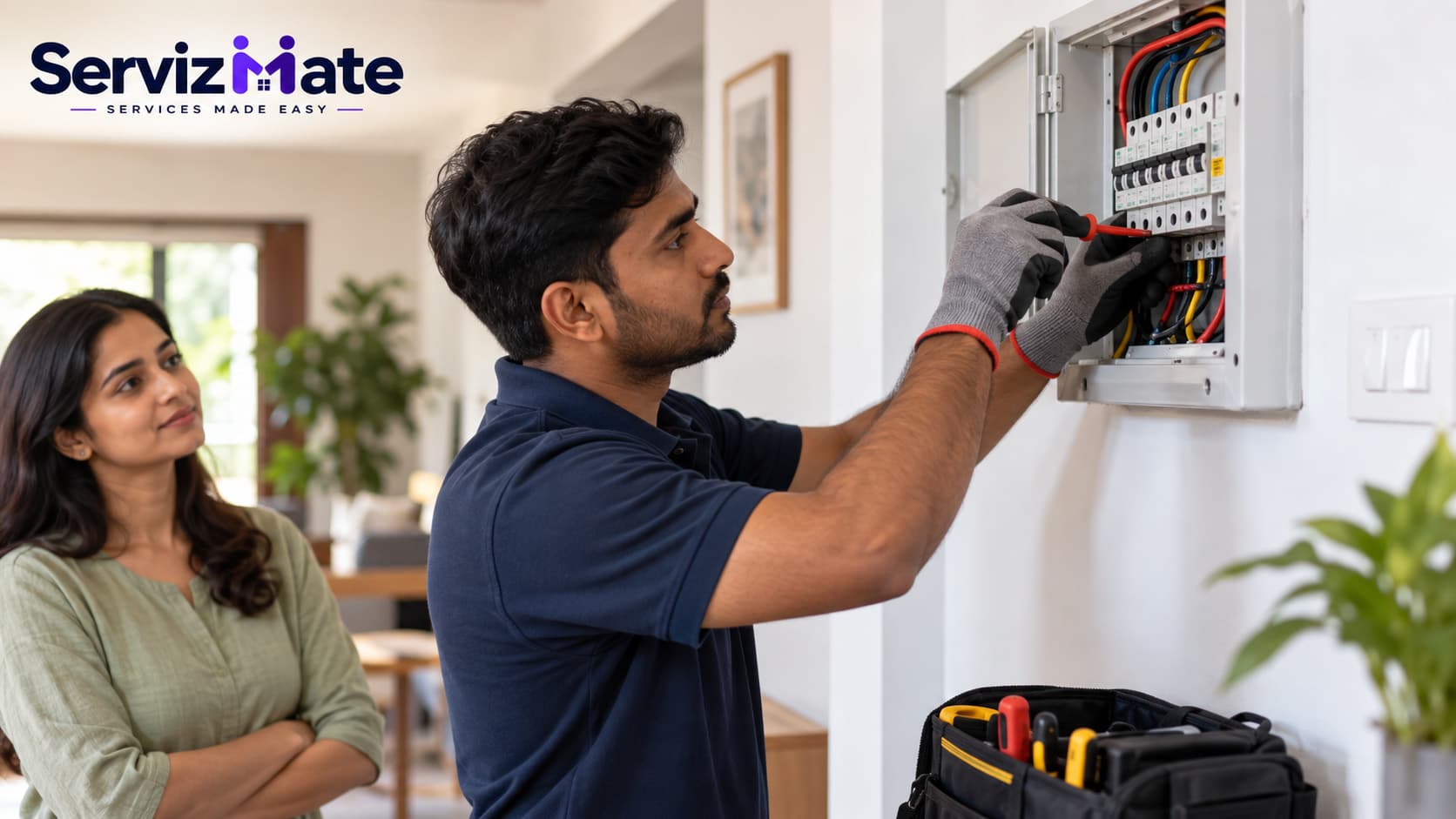
Electrical problems at home do not always begin with a dramatic failure. A loose connection, damaged wire, overloaded socket or repeatedly tripping breaker can be an early warning that something needs attention.
A short circuit can happen when electricity finds an unintended low-resistance path. The result can be a tripped circuit breaker, damaged equipment, overheating or, in serious cases, an electrical fire. Good maintenance and safe everyday habits can reduce avoidable electrical risks.
Use the checklist below to inspect the common problem areas in your home. If you notice damaged wiring, burning smells, repeated breaker trips or other electrical faults, do not attempt a repair yourself. Have the installation checked by a qualified electrician.
Quick Home Electrical Safety Checklist
- Check sockets, switches and visible wires for damage.
- Do not overload sockets or extension boards with multiple high-power appliances.
- Replace damaged, frayed or visibly deteriorated power cords.
- Pay attention to sockets or switches that become unusually warm.
- Do not ignore repeated MCB or circuit-breaker trips.
- Keep electrical connections away from water and damp areas.
- Make sure the home's earthing arrangement is properly maintained.
- Use the correct electrical rating for appliances and circuits.
- Keep electrical panels accessible and free from clutter.
- Arrange a professional inspection when an electrical problem keeps returning.
What Causes Short Circuits at Home?
A short circuit can occur when electrical conductors come into unintended contact or when damaged insulation allows current to take an unintended path. Several conditions can contribute to electrical faults in a home.
- Damaged or deteriorated wiring
- Loose electrical connections
- Faulty switches, sockets or appliances
- Incorrectly installed electrical components
- Overloaded circuits
- Moisture entering electrical equipment or connections
- Physical damage to cables
The exact cause cannot always be identified from the symptom alone. For example, a breaker that keeps tripping may indicate an overloaded circuit, a faulty appliance, a wiring problem or another electrical fault.
1. Check Your MCBs and Circuit Breakers
MCBs and other protective devices are designed to interrupt an electrical circuit when a fault or excessive current condition occurs. If a breaker trips occasionally, the cause should still be understood rather than repeatedly resetting it without investigation.
Pay attention if a particular breaker trips whenever you switch on a certain appliance or when several appliances are operating at the same time.
Warning signs to watch for
- A breaker trips repeatedly.
- The same circuit loses power frequently.
- You notice a burning smell near the electrical panel.
- A breaker or panel component appears damaged or overheated.
- Lights flicker or dim when high-power appliances are switched on.
If a breaker keeps tripping, stop treating the reset as the solution. The underlying cause should be checked by a qualified electrician.
2. Avoid Overloading Sockets and Extension Boards
One of the easiest electrical safety mistakes to make is connecting too many appliances to one outlet or extension board.
High-power appliances can place a significant load on a circuit. Using several of them through the same extension board or socket can cause overheating if the setup is not suitable for the load.
| Situation | Safer Approach |
|---|---|
| Several high-power appliances on one extension board | Use suitable dedicated outlets or have the circuit assessed by an electrician. |
| Damaged extension cord | Stop using it and replace it with a suitable, properly rated cord. |
| Extension board used as permanent household wiring | Ask an electrician whether additional fixed outlets are needed. |
| Power board becoming hot | Disconnect the load safely and have the setup inspected. |
An extension board adds outlets; it does not automatically increase the electrical capacity of the circuit.
3. Inspect Visible Wires, Plugs and Sockets
Take a quick look at accessible electrical components around your home. You do not need to open sockets, switches or panels to perform a basic visual check.
Look for:
- Cracked or damaged sockets
- Loose switches or socket plates
- Frayed appliance cords
- Exposed conductors
- Burn marks or discoloration
- Plugs that fit unusually loosely
- Cables that have been crushed, pinched or physically damaged
Never handle exposed electrical conductors or attempt to repair damaged wiring while the circuit is live. A qualified electrician should handle electrical repairs.
4. Do Not Ignore Heat, Burning Smells or Buzzing Sounds
Electrical components should not normally produce a persistent burning smell, sizzling sound or unusual buzzing. A warm or discolored socket can also be a warning sign.
If you notice these symptoms, stop using the affected outlet or appliance if it is safe to do so and arrange a professional inspection.
5. Keep Electricity Away From Water
Water and electricity create a particularly dangerous combination. Take extra care in kitchens, bathrooms, utility areas, balconies and other places where moisture may be present.
- Keep electrical appliances and connections away from water.
- Do not handle plugs or switches with wet hands.
- Do not use damaged electrical equipment in damp conditions.
- Have electrical points in moisture-prone areas installed and protected appropriately.
If water has entered an electrical panel, socket or appliance, do not touch the affected equipment. Have the situation assessed by a qualified professional.
6. Check Your Home's Earthing
Proper earthing is an important part of electrical safety. It provides a path for fault current and helps protective devices operate as intended when a fault occurs.
Homeowners should not attempt to test or modify an earthing system themselves. If you are unsure about the condition of your home's earthing, particularly in an older installation, ask a qualified electrician to inspect it.
An electrician can assess the installation and determine whether testing, maintenance or corrective work is required.
7. Be Careful With High-Power Appliances
Appliances such as air conditioners, water heaters, ovens, washing machines and other high-power equipment should be connected to electrical circuits that are suitable for their requirements.
Problems can occur when a high-power appliance is connected through an unsuitable extension board, damaged socket or circuit that is not appropriate for the load.
If you are adding a new high-power appliance, do not assume an existing socket is automatically suitable. An electrician can check the circuit, connections and protection before installation.
8. Watch for These Early Warning Signs
Small electrical symptoms can provide useful clues that an installation needs attention.
| Warning Sign | What It May Indicate |
|---|---|
| Frequent MCB trips | Possible overload, appliance fault or wiring problem |
| Flickering or dimming lights | Possible connection, circuit or supply issue |
| Burning smell | Possible overheating or damaged electrical component |
| Warm or discolored socket | Possible overheating or poor connection |
| Buzzing or sizzling sound | Possible electrical connection or component fault |
| Repeated power loss on one circuit | Possible circuit, breaker or appliance-related problem |
These symptoms do not identify a specific fault by themselves. They are reasons to stop and investigate rather than continue using the affected electrical point as normal.
Common Electrical Safety Mistakes to Avoid
Resetting a Tripped MCB Again and Again
A breaker trip is a protective response. If the same breaker repeatedly trips, find out why instead of repeatedly resetting it.
Using Damaged Cords
Frayed insulation, exposed wires or damaged plugs should not be ignored. Replace damaged cords or have the appliance checked by a qualified professional.
Connecting Multiple High-Power Appliances to One Socket
A socket or extension board should not be treated as an unlimited power source. Consider the combined load and the suitability of the circuit.
Trying to Repair Live Wiring
Electrical troubleshooting and repair can expose you to electric shock, burns and other hazards. Do not experiment with exposed wiring or electrical panels if you are not qualified to work on them.
Ignoring a Burning Smell
A burning smell from a socket, switch, appliance or electrical panel is not normal. Stop using the affected equipment where it is safe to do so and arrange an inspection.
When Should You Call an Electrician?
You should arrange professional electrical service when a problem is recurring, involves wiring or the electrical panel, or presents a potential shock or overheating hazard.
Professional help is especially appropriate if:
- Your MCB or breaker keeps tripping.
- You find damaged or exposed wiring.
- A socket or switch is hot, discolored or damaged.
- You notice burning smells, buzzing or sizzling sounds.
- You need additional sockets for regular appliance use.
- You are installing a high-power appliance.
- You want your home's earthing or electrical installation inspected.
- You are unsure whether an electrical problem is safe to troubleshoot yourself.
How a Professional Electrical Inspection Helps
A professional electrician can investigate the actual cause of an electrical problem instead of treating only the visible symptom.
Depending on the issue, the inspection may involve checking the relevant circuit, connections, protective devices, wiring condition, sockets, switches or earthing arrangement. The electrician can then recommend the appropriate repair or maintenance work.
Electrical installations should be maintained and worked on according to applicable safety requirements and standards. In India, the Central Electricity Authority publishes regulations covering measures relating to safety and electric supply. :contentReference[oaicite:0]{index=0}
Keep Your Home Electrical System Safer With ServizMate
You do not need to wait for a serious electrical failure before getting help. If you are noticing repeated MCB trips, damaged sockets, wiring concerns or other electrical issues, getting the problem checked early can help you understand what needs to be repaired.
ServizMate connects homeowners with professionals for electrical repair and service. If something in your home's electrical system does not look or feel right, book an electrician to inspect the problem instead of attempting a risky DIY repair.
Need electrical help at home? Book an electrician through ServizMate for professional inspection, repair and maintenance.
Frequently Asked Questions
What is the most common cause of a short circuit at home?
Short circuits can have several causes, including damaged insulation, faulty wiring, loose connections, defective appliances or moisture. The exact cause needs to be identified through proper inspection.
Can an MCB prevent a short circuit?
An MCB is a protective device that can disconnect a circuit when certain fault or overcurrent conditions occur. It is an important part of electrical protection, but it does not make an unsafe installation safe by itself.
Why does my MCB keep tripping?
Repeated tripping can be associated with an overloaded circuit, a faulty appliance, wiring problems or another electrical fault. Do not repeatedly reset the breaker without finding the cause.
Is it safe to use an extension board for multiple appliances?
It depends on the appliances, the extension board's rating and the electrical circuit. Avoid overloading extension boards, especially with high-power appliances, and do not use damaged cords or boards.
How often should home electrical wiring be checked?
There is no single inspection interval that applies to every home. The appropriate schedule depends on the age and condition of the installation, changes made to the property and any symptoms you notice. Older homes or homes with recurring electrical problems may benefit from a professional inspection.
Should I repair a short circuit myself?
No. A short circuit can involve damaged wiring, faulty equipment or other electrical faults that may expose you to electric shock or fire. If you suspect a short circuit, switch off power only when it is safe to do so and contact a qualified electrician.
Need Professional Electrician Work Done in Hyderabad?
Book verified professionals near you with instant appointment scheduling & transparent pricing.