Most plumbing problems start small. A dripping tap, slow kitchen drain or toilet that runs longer than it should may seem harmless at first, but ignoring these signs can turn a simple maintenance issue into a more disruptive repair.
For homeowners in Hyderabad, regular attention to household plumbing is especially useful during periods of heavy rain, when blocked drains and water-related issues can become more noticeable. Knowing what to check, what you can safely maintain yourself and when to call a plumber can save time and prevent unnecessary damage.
Here are 10 practical plumbing tips every Hyderabad homeowner should know.
1. Check for Small Water Leaks Regularly
A small leak can be easy to miss, particularly under sinks, behind toilets or around bathroom fittings. Make it a habit to look at visible pipes, taps and connections for signs of moisture.
Check for:
- Water collecting underneath a sink
- Dripping taps or shower fittings
- Damp areas around pipe connections
- Water stains on walls or ceilings
- Unexpectedly wet areas around a toilet
A leak that keeps returning after a temporary tightening or adjustment should be inspected professionally.
2. Don't Ignore a Slow Drain
A slow drain is often an early sign that something is restricting the pipe. Hair, soap residue, food particles and other debris can gradually build up inside household drains.
For sinks and showers, regularly removing visible debris from the drain cover can help reduce buildup. Avoid pushing objects or large amounts of waste into the drain simply because the water is still flowing.
If a drain repeatedly becomes slow even after basic cleaning, the blockage may be deeper in the pipe and may require professional attention.
3. Keep Food Waste Out of Kitchen Drains
The kitchen sink is not a substitute for a waste bin. Food particles, grease and other solid waste can accumulate inside drainage pipes and contribute to blockages.
A simple routine helps:
- Scrape food scraps into the bin before washing dishes.
- Use a suitable sink strainer to catch solid particles.
- Avoid pouring cooking grease or oil directly into the drain.
- Clean the strainer regularly.
If your kitchen drain is already blocked, repeated DIY attempts may push the blockage deeper. A plumber can determine where the obstruction is and remove it using the appropriate method.
4. Know Where Your Main Water Shut-Off Valve Is
Every homeowner should know how to stop the main water supply to their home. This becomes particularly useful if a pipe suddenly bursts or a major leak develops.
Knowing the location of the shut-off valve can help you act quickly while waiting for professional assistance. Make sure other members of the household know where it is as well.
If you cannot identify your home's main shut-off valve, ask a plumber to show you its location during your next plumbing visit.
5. Watch Your Toilet for Silent Leaks
A toilet can sometimes lose water without producing an obvious puddle. A faulty flush valve, fill valve or other internal component can cause water to continue moving into the bowl.
Signs to watch for include:
- The toilet runs for a long time after flushing.
- You hear occasional water movement when nobody is using the toilet.
- The toilet needs to be flushed repeatedly.
- There is visible water around the base of the toilet.
If the toilet keeps running or leaks around its base, have the fitting inspected instead of repeatedly adjusting the mechanism yourself.
6. Keep Bathroom Drains Clear
Bathroom drains commonly collect hair, soap residue and other debris. Over time, this can slow drainage and eventually cause a blockage.
Remove visible hair and debris from drain covers regularly. If water continues to drain slowly or begins backing up, professional drain cleaning may be needed.
7. Check Water Pressure When Something Feels Different
A noticeable change in water pressure can be a useful warning sign. If a tap or shower suddenly has much weaker flow than usual, the cause could be related to the fitting, supply, blockage or another plumbing issue.
Do not assume that low pressure always means the entire home's plumbing system needs replacement. A plumber can inspect the affected fixtures and identify where the problem is occurring.
| What you notice | What to check first |
|---|---|
| Low flow from one tap | Check the tap fitting and its aerator for visible blockage. |
| Low flow from one shower | Check the shower fitting and visible connections. |
| Low flow throughout the home | Consider a professional plumbing inspection. |
| Sudden change accompanied by leakage | Stop using the affected fitting if necessary and arrange professional help. |
8. Prepare Your Plumbing Before Heavy Rain
Hyderabad receives periods of heavy rainfall, so it is worth checking areas where water can collect or drainage can become obstructed.
Before the rainy season or during periods of frequent rain:
- Keep outdoor drains clear of leaves and debris.
- Check that water can flow away from the property without obvious obstruction.
- Look for recurring water pooling around drainage areas.
- Pay attention to damp patches that appear after rain.
- Arrange an inspection if rain consistently causes drainage or leakage problems.
Outdoor drainage problems can have causes beyond the home's internal plumbing, so persistent water accumulation should be assessed properly rather than treated as a temporary nuisance.
9. Don't Treat Every Plumbing Problem as a DIY Job
Basic maintenance is reasonable, but plumbing repairs can become complicated when pipes are concealed inside walls, connections are damaged or water is reaching electrical areas.
Avoid attempting repairs when:
- A pipe has burst or is leaking heavily.
- Water is entering a wall, ceiling or electrical area.
- A blockage keeps returning.
- You cannot identify the source of a leak.
- A fixture needs replacement or major dismantling.
- There is a problem with concealed plumbing.
If you are unsure about a plumbing repair, stopping the water supply where it is safe to do so and calling a professional is usually better than experimenting with the installation.
10. Fix Small Problems Before They Become Bigger Repairs
Plumbing maintenance is often about noticing changes early. A dripping tap, loose connection or slow drain may not require a major repair today, but ignoring a recurring problem can allow it to develop further.
Keep a simple household plumbing checklist:
- Check visible pipes and connections for leaks.
- Look under kitchen and bathroom sinks.
- Listen for toilets that continue running after flushing.
- Keep drains free of hair, food and solid waste.
- Know the location of the main water shut-off valve.
- Check outdoor drainage before periods of heavy rain.
- Get recurring plumbing problems professionally inspected.
Common Plumbing Mistakes Homeowners Should Avoid
Pouring Grease Down the Kitchen Sink
Liquid grease may seem harmless when it is hot, but it can contribute to buildup as it cools and mixes with other material inside a drainage system.
Ignoring Repeated Toilet Problems
A toilet that constantly runs or repeatedly develops the same issue should be inspected rather than adjusted over and over without identifying the cause.
Using Excessive Force on Fixtures
Forcing a stuck tap, valve or fitting can damage the component or its connection. If a fitting does not move normally, professional assistance is safer.
Using Chemicals as the First Solution for Every Blockage
A chemical drain product is not appropriate for every plumbing situation. Persistent blockages, recurring drainage problems or suspected pipe damage should be assessed by a professional.
Ignoring Water Marks on Walls or Ceilings
A damp patch or unexplained stain can indicate a hidden leak. Finding the source early can help prevent further water damage.
When Should You Call a Plumber?
Some plumbing problems need professional attention rather than routine maintenance. Contact a plumber when the source of the problem is unclear, the issue keeps returning or there is a risk of water damage.
Professional help is particularly appropriate for:
- Major or continuous water leaks
- Burst or damaged pipes
- Persistent drain blockages
- Low water pressure throughout the home
- Hidden or wall-mounted plumbing leaks
- Toilet leaks that do not stop after basic checks
- Bathroom or kitchen fixture replacement
- Recurring drainage problems during heavy rain
Plumbing Maintenance for Hyderabad Homes
A few minutes of regular checking can help you spot plumbing problems before they become disruptive. Keep drains clear, watch for leaks, know where the main water valve is and pay attention to changes in water flow or drainage.
For homes in Hyderabad, it is also sensible to pay attention to outdoor drainage and areas affected by heavy rainfall. If a plumbing issue keeps coming back or you cannot safely identify the cause, professional inspection is the better option.
Need a Plumber? ServizMate Can Help
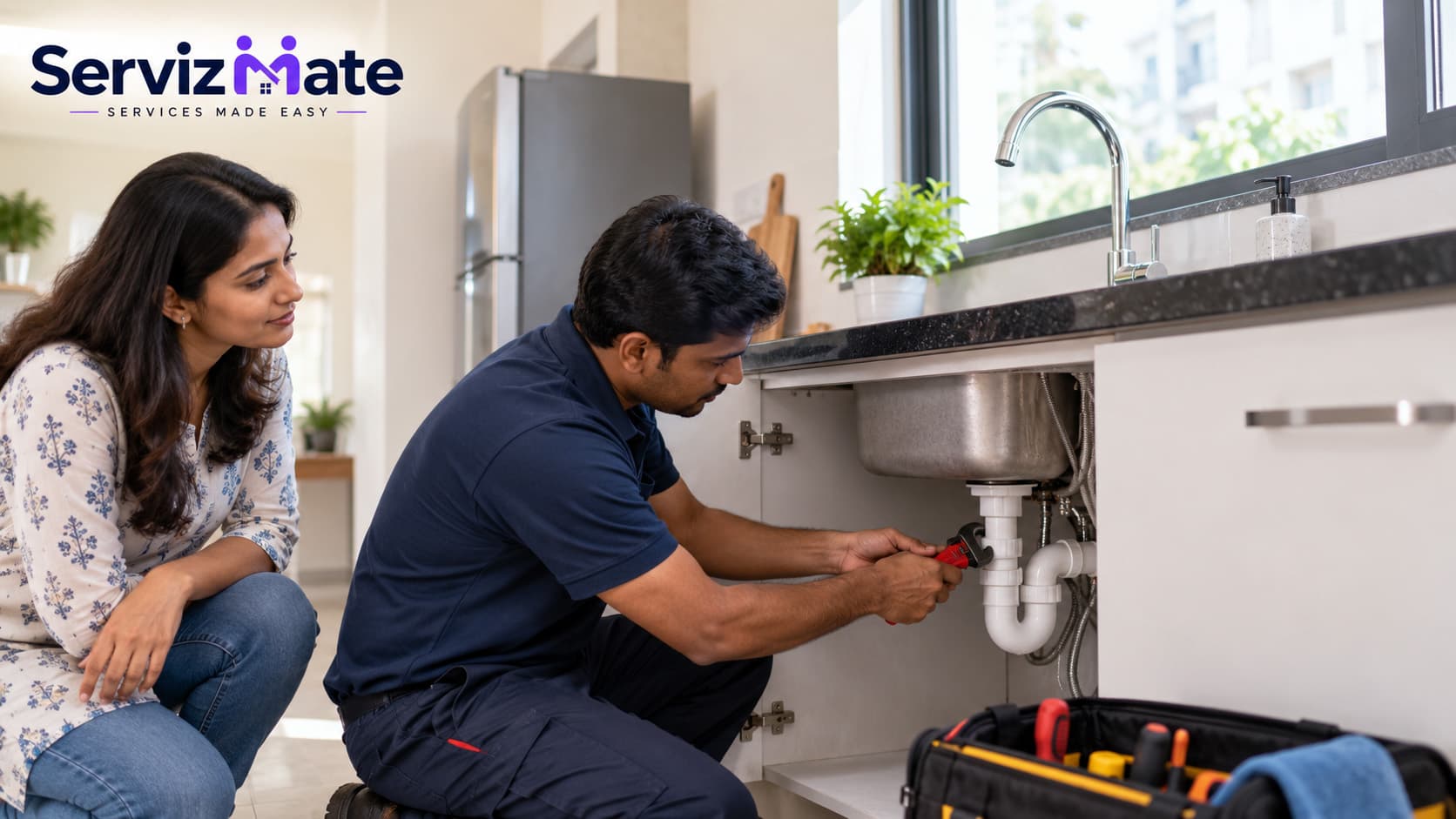
When a plumbing problem goes beyond basic maintenance, ServizMate makes it easier to arrange professional plumbing service for your home.
Whether you are dealing with a leaking tap, clogged drain, toilet issue, water-flow problem or another plumbing concern, a professional plumber can inspect the problem and recommend the appropriate repair.
Need plumbing help at home? Book a plumber through ServizMate and get the issue checked before a small problem becomes a bigger one.
Frequently Asked Questions
How can I prevent plumbing problems at home?
Regularly check for leaks, keep kitchen and bathroom drains clear, avoid putting grease and solid waste into drains, inspect visible connections and address recurring problems early.
How do I know if my toilet has a leak?
A toilet that continues running after flushing, makes occasional water sounds when unused or has water around its base may need inspection.
What should I do if a pipe suddenly bursts?
If it is safe to do so, shut off the main water supply and keep people away from areas where water may have reached electrical equipment. Arrange professional plumbing assistance as soon as possible.
Why is my kitchen sink draining slowly?
Food particles, grease and other debris can restrict the drain. Remove visible debris and avoid adding more waste. If slow drainage persists or keeps returning, have the drain professionally inspected.
Should I call a plumber for a small leak?
If a leak is persistent, its source is unclear, or it is coming from concealed plumbing, professional inspection is recommended. Small leaks can become more disruptive when left unresolved.
How often should I check my home's plumbing?
There is no single schedule that fits every home. A quick visual check every few months and whenever you notice a change in water flow, drainage or moisture is a practical habit. Older plumbing systems or homes with recurring issues may need more frequent professional attention.
What plumbing issues are common during heavy rain?
Blocked outdoor drains, water pooling and drainage-related problems can become more noticeable during heavy rain. Keeping accessible drainage areas clear and addressing recurring water accumulation can help identify problems early.
Need Professional Plumber Work Done in Hyderabad?
Book verified professionals near you with instant appointment scheduling & transparent pricing.